
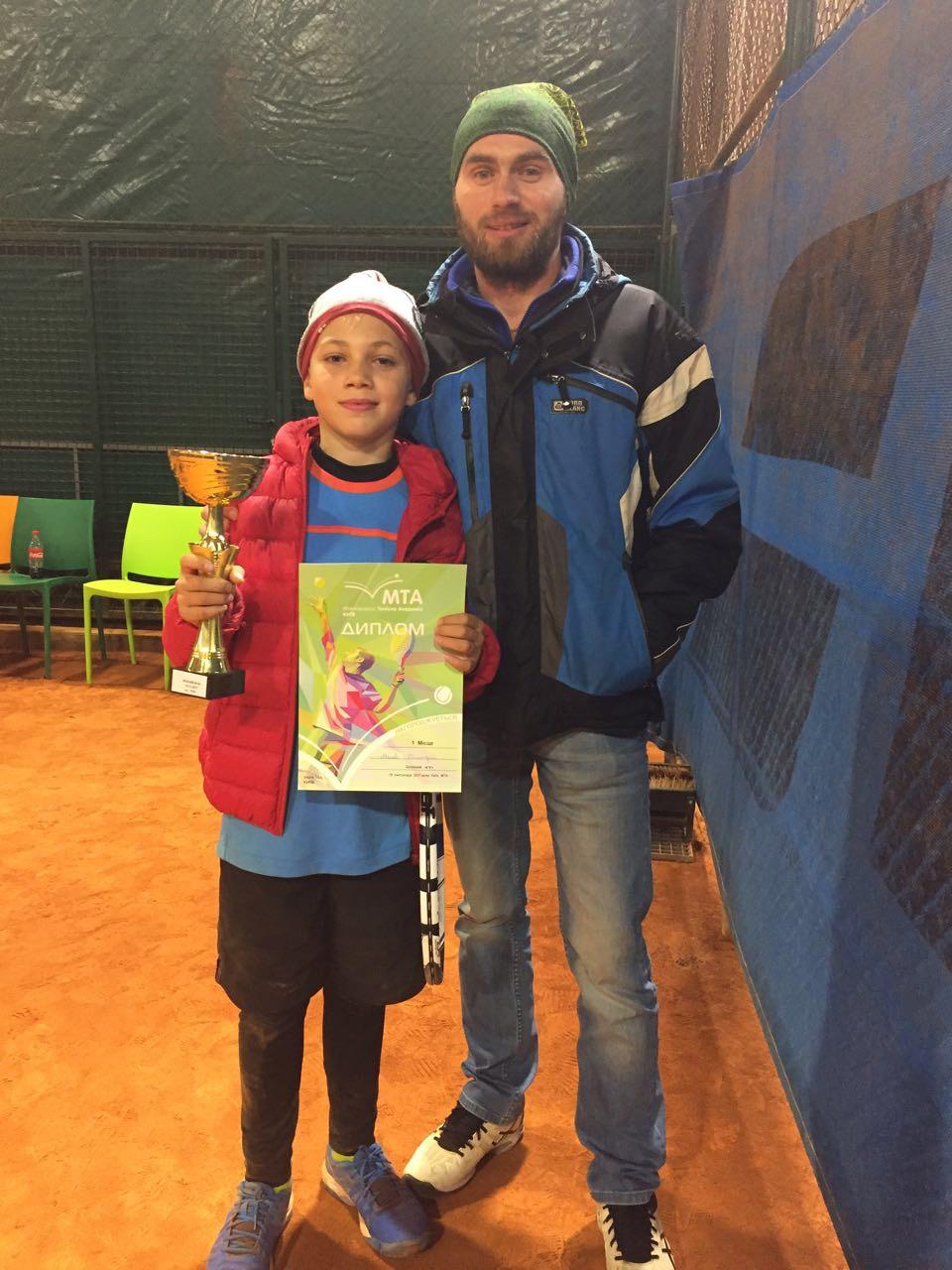
From me: Today I am training at the Rafa Nadal Academy, but my thoughts often return to my first steps at MTA. I remember our training camps and how my first coach believed in me when I could barely hold a racquet. I decided to launch this interview series on SABA.global with a conversation with him—about tennis, war, raising champions, and the path that chooses us.
Set 1. How It All Began: A Hunger for Knowledge and 90s Tennis
Me: Yegor Valeriyovych, let’s rewind. Tennis 20 years ago in Ukraine was definitely not mainstream. Why did you choose the racquet? was it love or your parents’ choice?
Yegor Valeriyovych: I had almost no choice. I grew up in a poor family, and my dad was looking for a way to earn money. He had been in sports his whole life and found a niche—tennis, which at that time was played only by aristocrats or wealthy people. In Zhovti Vody, there were only three courts where almost nobody played. My father simply challenged himself: he not only learned to play but read every possible book on the subject. That’s how he became a coach.
My brother and I practiced karate, and we played tennis as amateurs 2–3 times a week. The level of preparation was weak because learning solely from books is far from being a PRO. But that is exactly what created an incredible hunger for knowledge in me. I believe that scarcity generally rules the world—it is exactly what pushes us to create something truly great. Tennis saved our family: Dad found a livelihood, and my brother and I found our passion.
Me: When was that turning point when you realized: “I am no longer a player, I am a coach”?
Yegor Valeriyovych: I was 17. I clearly understood that we simply didn’t have the finances for a professional playing career. I started helping my dad and earning my first honest money. Then came the institute, work as a young coach, and at 20, I went to Kyiv for my first seminar. That was when I finally realized my path. After another seminar, I was invited to TC “VicCourt” in Donetsk—the largest academy of that time. From that moment on, tennis became not just a passion, but the place where all my dreams and goals focused.
Me: Is a coach’s job more about “teaching how to hit a forehand” or “teaching how not to give up”? What is the ratio of psychology to technique?
Yegor Valeriyovych: Every period has its own accent. From ages 4 to 7, it is important simply to make the child fall in love with the process. Later, at 13–15, the focus is on technique and physique. And between 14 and 18, that very “mental monument of steel” is formed.
But the most important mission of a coach is to preserve the player’s desire to step onto the court every day. A coach must teach them to make decisions and take responsibility. Only free and responsible people create the conditions for success around them; a synergy effect emerges. Since tennis requires high intelligence, an athlete’s knowledge directly influences their ambitions. It is a marathon, and only the strongest reach the end.
Set 2. On Students and True Talent
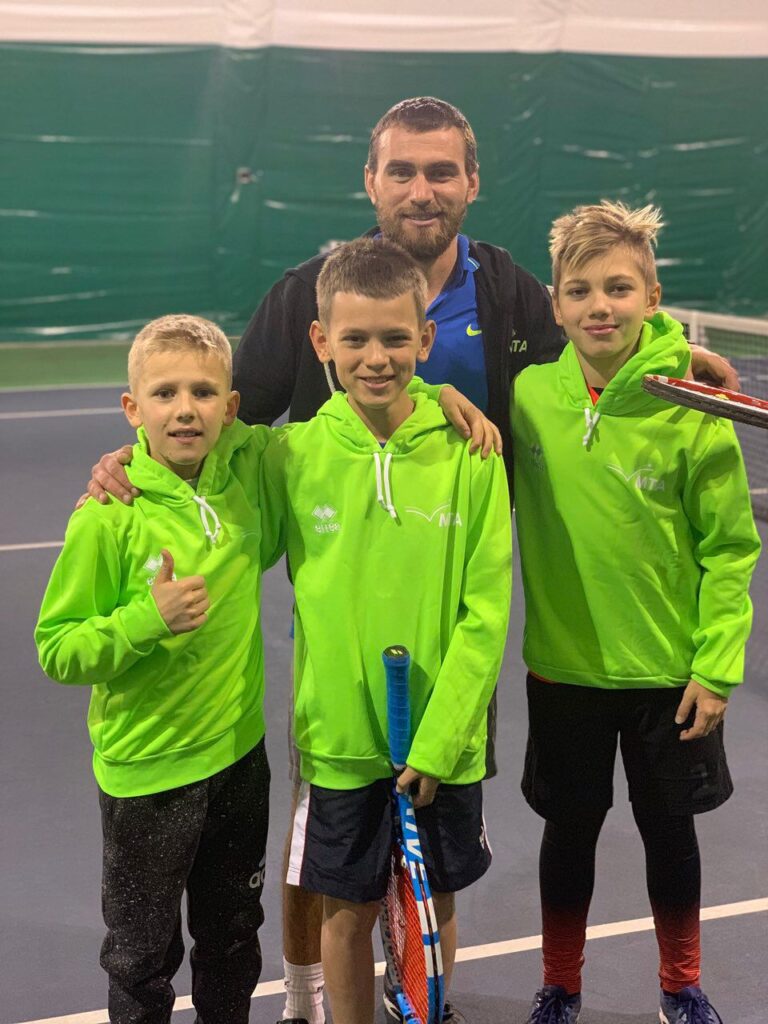
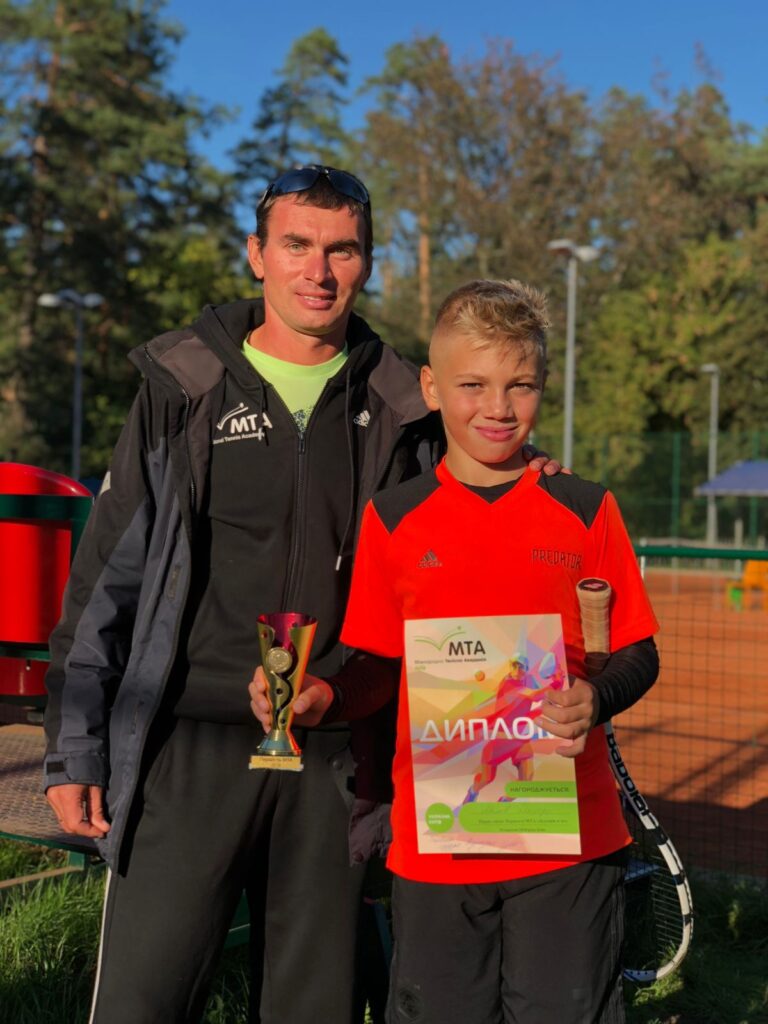
Me: When you took me into your group, I wasn’t a ready-made athlete. What did you see in me back then? Honestly: was there ever a thought of “what am I going to do with him”?
Yegor Valeriyovych: (Laughs). Dima, the answer is unequivocal: you were so hungry for victory that you didn’t need extra motivation. With such a thirst, you can develop any talent. You were like a locomotive smashing through barriers. Your physical abilities were average, but that is exactly what allowed us to expand your body’s options infinitely. I just looked for the right exercises and words.
Me: How do you define talent? Do the “grinders” (hard workers) beat the gifted ones?
Yegor Valeriyovych: Talent (coordination, speed) is visible at 10–12 years old, and it is usually genetics, which can only be improved by 10–20%. But in the marathon, those who “grind” and have a mental core win. Teaching someone to hit the ball isn’t a problem, but teaching someone to PLAY tennis—through defeats, blood, and sweat—is an art. Discipline can make a super athlete even out of a player with average data, like David Ferrer. And when the puzzle of talent and sweat comes together, we get a Federer or a Nadal.
Me: What is the most important lesson the kids have taught YOU over the years?
Yegor Valeriyovych: Patience. If the goal is high, it requires time. To raise a Grand Slam level player, you need 15–17 years. Unfortunately, war has stolen this time from me twice. First in Donetsk, when I had a very talented group, and now in 2022. I currently have all the tools, but time is always lacking.
Set 3. Mental Resilience and Burnout
Me: How do you teach a child not to break after losses? After all, on the court, you are completely alone.
Yegor Valeriyovych: It all starts with the family and what is discussed at the kitchen table. Parents often experience these difficult situations for the first time, just like their children. The “Triangle” always wins: Player — Coach — Family. During a match, rituals help: the towel, water, breathing. These are tools to return to “combat mode” when your legs feel heavy and nothing is working. It is in these moments that character is formed. If you fought to the end, you can say: “Mentally, I didn’t lose.”
Me: Have you ever had the desire to quit everything and go to a quiet office job?
Yegor Valeriyovych: No, never. There was a desire to try business in parallel with tennis, as I have the knowledge and ideas, but tennis has always remained the main thing.
Me: What is the key skill a modern player must have to survive in the PRO tour?
Yegor Valeriyovych: Patience and discipline.
Set 4. War and Reality
Me: How has the war changed you? Where do you find the strength to charge the kids up when there is horror all around?
Yegor Valeriyovych: The feeling of injustice and hatred—these are huge motivators to become stronger. The war has hardened my students. You, Dima, would never have learned languages to such a level or adapted so quickly if not for these circumstances. Western kids live in a “safety bubble”; they don’t know that the world is a jungle. But you know the price of every decision because you carry this pain within you. And, of course, my own children—I will do everything for them.
Me: Do you follow your former students?
Yegor Valeriyovych: Of course. Even those who were there before 2014. It is history, fragments of my life, and the intertwining of fates.
Tie-Break (Blitz)
Me: Clay, hard, or grass? Yegor Valeriyovych: Clay.
Me: Yelling at a student: sometimes useful or taboo? Yegor Valeriyovych: Allowable, but without insults. With love and care in your eyes.
Me: The Ideal Tennis Player (“Frankenstein”): Yegor Valeriyovych: Legs from Nadal, character from Djokovic/Nadal, backhand from Djokovic. Forehand, serve, slice, and volley—from Federer.
Me: What makes you get up in the morning for training for so many years in a row? Yegor Valeriyovych: Love and discipline.
Final: A Message to Parents and Players
Me: Yegor Valeriyovych, what is your final word for the readers of SABA.global?
Yegor Valeriyovych: Children grow up and become independent quickly. Parents are often left lonely after 20 years of living “for the children.” So, cherish every second now. Put down the phones. Make an investment in being “needed” in the future.
And if your child is in tennis—remember that you are in a closed club where you can find a true miracle. It will either knock you off your feet or give meaning to your whole life.